

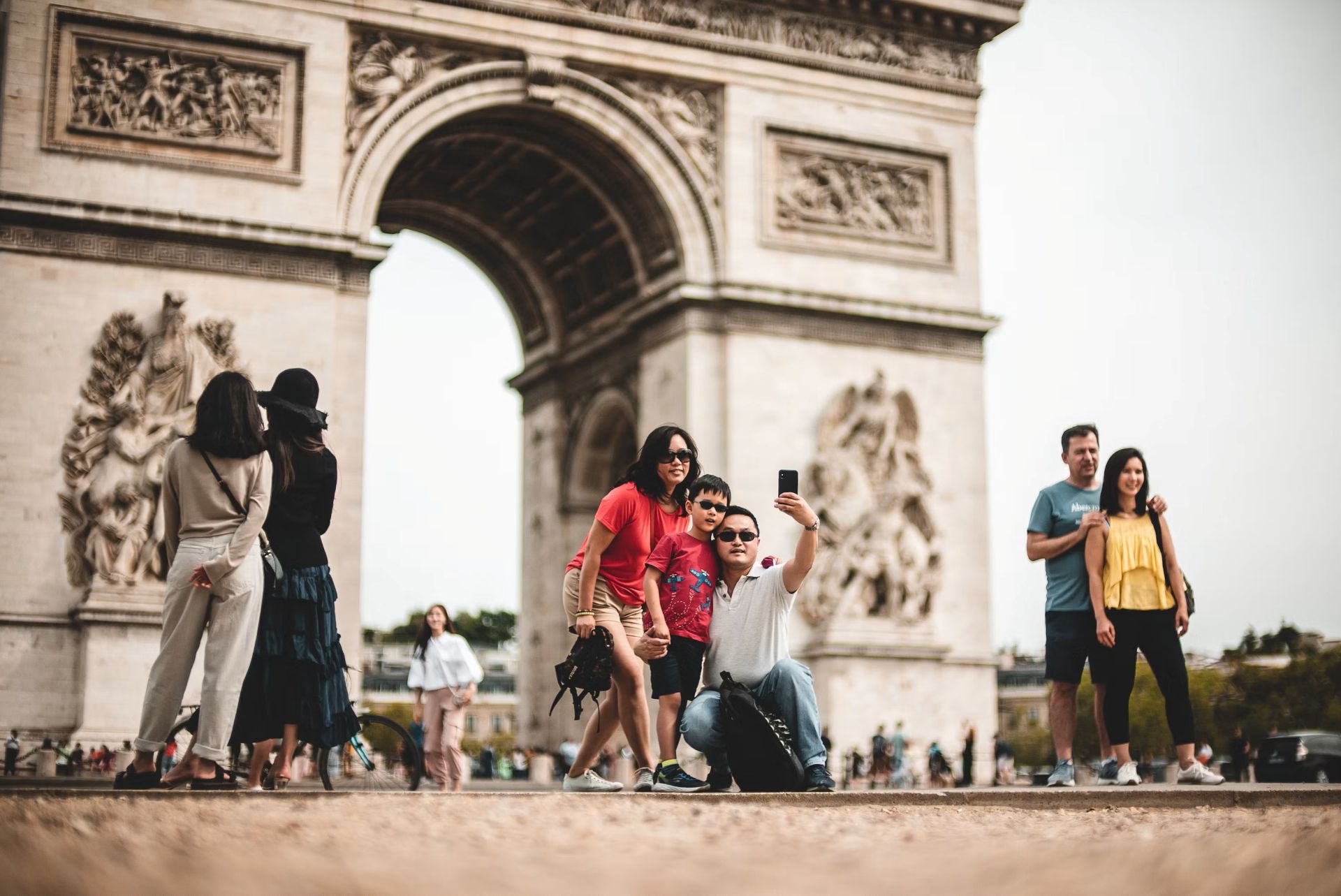
Year-end travel trends for 2026 point to a change in how people are choosing to close out their year: slower and more intentional than the checklist-driven holidays travelers used to plan. Search data across the travel industry shows more people researching multi-day train routes, dark-sky destinations, and lesser-known countries to discover and explore instead of the usual major cities. The habits of travelers around the world tell a consistent story as 2026 winds down: people want their last trip to count.
The travel trends defining how people are ending 2026
The following eleven trends outline where interest is heaviest as the year closes.
1. Slower journeys by rail
Rail travel is one of the clearest markers of how the year is ending. Bookings for train travel are up 41% compared to last year, with one 12-week stretch alone seeing a 77% spike in rail journey reservations, and broader travel trends for 2026 show train bookings up 25% year-on-year. Rail is widely seen as a greener option than short-haul flights, but the bigger draw is the journey itself. Train journeys, in a offer immersive experiences through scenic landscapes a plane window cannot match, turning transit time into part of the trip rather than a gap between destinations.
2. Real experiences over sightseeing checklists
Travelers are prioritizing immersive experiences over fast-paced sightseeing, a pattern most visible among younger travelers using tourism-focused AI-assisted planning to build itineraries around local culture rather than a fixed list of landmarks. Experiential travel emphasizes participation over passive sightseeing: cooking with locals, joining small group tours through local communities, or spending an afternoon on a farm instead of touring it from a bus window, part of growing interest in culinary and immersive cultural experiences. In a sense, these trips offer not just a view of the everyday life, but human touch and connection. Cultural experiences tied to cultural preservation draw steady interest, and more travelers are choosing trips that support wildlife protection over generic city tours.
3. Wellness as the point of the trip
Wellness travel is no longer a side benefit tacked onto a holiday plan. For many travelers, it’s the primary reason for the trip. Around 43% now seek nature-based wellness experiences, and wellness retreats increasingly compete with major cities as a category of their own, offering a break from digital saturation and sensory overload. Guests want natural light, unhurried mornings, and time in the natural world. Even in cities, public outdoor terraces and park-like greenspaces have become part of daily life, giving people pockets of calm and steadier energy levels without a full retreat.
4. Cooler months, quieter escapes
Timing matters as much as the destination. Many travelers are avoiding the hottest parts of southern Europe during peak summer, opting instead for shoulder-season travel with fewer crowds, lower prices, and richer local experiences, since destinations aren’t at tourist capacity. Their travel starts by late autumn in the Nordics, with its crisp air and changing landscapes, which is a particular draw, and travel to Scandinavia is expected to increase by 35% in 2026. Cooler days, early nights, and a slower pace suit travelers chasing quieter escapes over a packed summer itinerary.
5. Lesser-known places gaining ground
Authentic experiences are driving interest in lesser-known destinations. Laos bookings rose 33% year-on-year, Nicaragua grew 32%, and Mongolia posted a striking 118% rise in travel bookings. Travelers are also visiting places like Ghana, while Colombia’s Coffee Triangle, South Korea, and Costa Rica’s national parks draw those looking beyond the usual major cities. Narrowbody aircraft are enabling direct, non-stop flights to secondary global cities that once required multiple connections, and travelers are moving toward longer stays and fewer destinations per trip. Some of this overlaps with ancestry travel, as people use trips to trace family history.
6. Chasing dark skies
Demand for stargazing and night-sky tourism is growing significantly, driven by light pollution concerns closer to home. Over 80% of the world’s population now lives under light-polluted skies, making destinations with dark skies genuinely rare. The Atacama Desert offers some of the clearest skies on Earth, alongside national parks protecting native plants and natural soundscapes. Astrotourism includes stargazing and solar eclipse viewing, with interest climbing further for events like the total solar eclipse crossing mainland Europe. Northern lights viewing follows the same logic, with travelers planning entire trips around a narrow window of night skies.
7. Multi-generational travel, planned together
Family travel is changing shape. Nearly 30% of families now embrace skip-gen travel, where grandparents and grandchildren travel together without the middle generation, while 73% of parents expect their children to help plan trips. Multi-generational travel requires adaptable activities for all ages, which is why nature appeals universally: hiking trails, local forests, and wildlife encounters work across generations in ways museum tours often don’t. Families are prioritizing shared experiences over financial legacy, treating trips as a chance to create memories. Among affluent travelers, this pairs with a move toward understated luxury and genuine human connection.
8. Solo travel on its own terms
Solo travel continues to grow as more people use trips to reset entirely on their own terms, without coordinating an itinerary around anyone else’s pace. Rather than isolated luxury, most solo travelers are still seeking out local people and local communities, choosing homestays, cooking classes, or small group tours over private, closed-off experiences. It overlaps naturally with wellness and experiential travel, since solo trips often center on rest and unstructured time rather than a packed sightseeing agenda.
If you want to experience museums from a different perspective, visiting the Museum of Modern Art (MoMA) shatters the idea of a traditional, passive museum, instead offering an interactive ecosystem where textile design, global film, and textbook masterpieces stand side by side. The Midtown Manhattan museum holds an unrivaled collection of modern Western art. In the middle of the modern complex is the Philip Johnson Sculpture Garden, conceived as a roofless room where works by Rodin and Giacometti sit amidst fountains and weeping willows.
MoMA also features two public outdoor terraces that allow guests different vistas of the museum. Beyond these exhibits are the MoMA Design Store, which showcases avant-garde kitchen gadgets and furnishings, and The Modern, a Michelin-starred culinary spot.
9. Set-jetting: traveling to the screen’s favorite places
Set-jetting, which is a play on the term jet-setting involves planning a trip around a favorite film, series, or celebrity-linked destination, continues to shape where people book flights and hotels. A well-timed release can send bookings to a small town or coastline with little prior tourism, briefly turning it into one of the more searched destinations online. For many travelers, it’s less a novelty and more a shortcut through countless options: a familiar setting gives a trip a built-in reason and a story to tell, without much extra planning.
10. Traveling with intention
Travelers are cutting back on trip frequency and duration, choosing fewer, more deliberate trips that prioritize wellbeing and cultural connection over sheer volume. Sustainable travel now emphasizes safety and minimizing environmental impact alongside discovery. About 69% of travelers say they want to leave places better than they arrived, pushing sustainable travel toward supporting local communities directly through homestays and locally owned operators. Regenerative travel goes further, aiming to strengthen ecosystems and communities rather than simply avoid harming them.
11. Smarter, more cautious planning
Behind the scenes, planning trips looks different than a few years ago. Global business travel spending is reaching historic highs at $1.57 trillion, even as leisure travelers grow more careful with budgets. Travel costs are rising due to higher energy prices and geopolitical factors, pushing travelers toward a more conservative travel posture: booking closer to departure, comparing prices, and building in flexibility. Last-minute booking is becoming more common amid economic uncertainty, and flexibility and risk management now shape how trips get structured. There’s also a surge in demand for stress-free, all-inclusive packages, including luxury cruises, where cruise lines and cruise ships handle most of the logistics. AI tools are streamlining trip planning, and more travelers are researching and booking through social platforms, letting travel experts handle all the logistics.
What the year ahead looks like for travelers
Taken together, these travel trends point to a year ahead shaped by pacing and intention rather than distance covered. Rail journeys, dark-sky destinations, and lesser-known countries all point to the same instinct: travelers want their year-end trip to feel earned rather than rushed.
Trips increased demand for authenticity over convenience in recent years, and that shows no sign of slowing as 2026 closes out. Around the world, travelers are recalibrating what a good holiday plan looks like, whether that means a train through unfamiliar countryside, a solo reset, or a multi-generational trip built around shared time. For travelers still finalizing plans, the year-end travel trends for 2026 suggest one thing clearly: the destination matters less than the quality of time spent there.
