

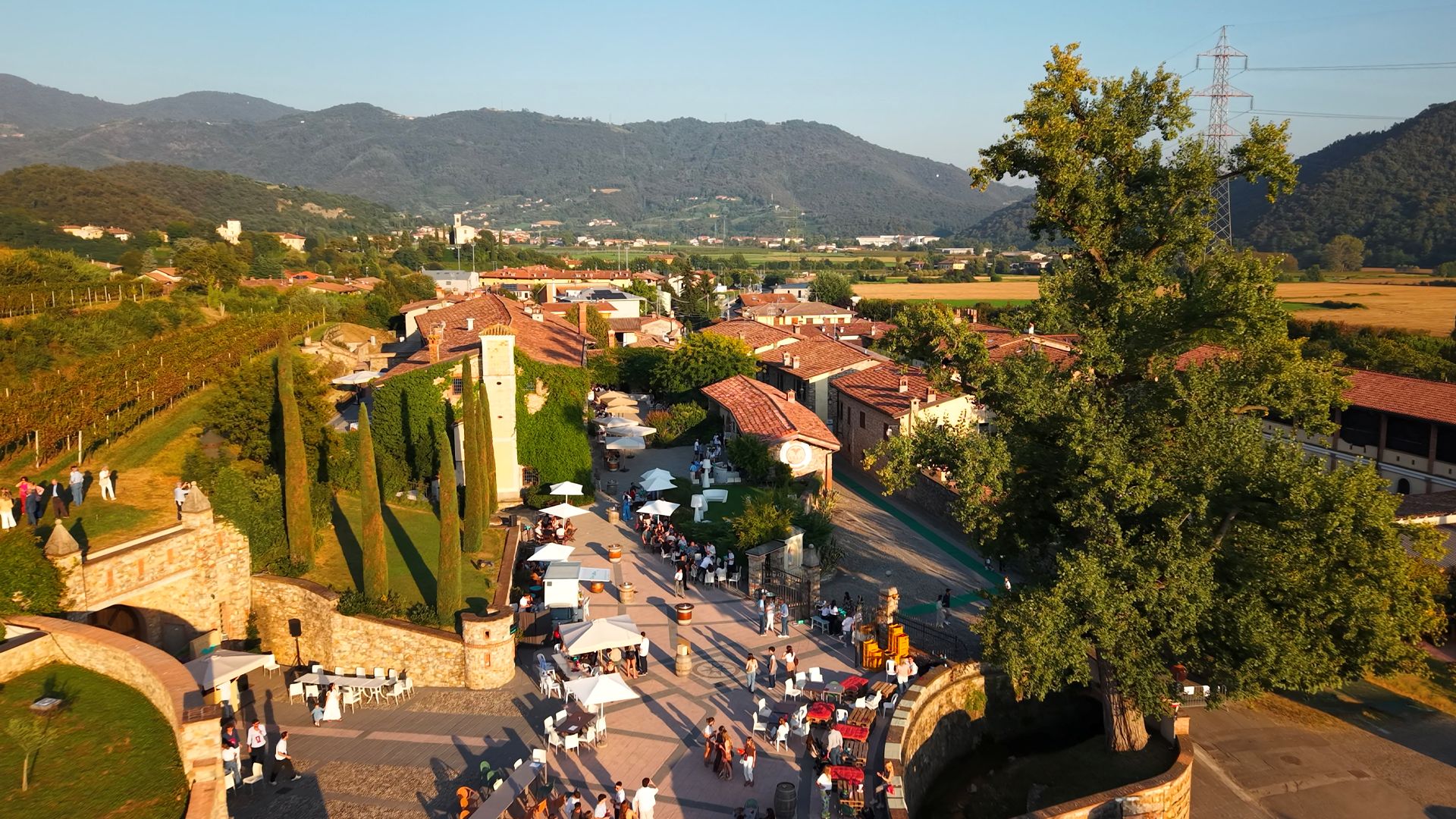
This September 2026, two Italian wine regions turn their harvest season into a public celebration, and the Franciacorta wine festival stands as one of the most anticipated stops on that calendar. Held in the rolling hills of Lombardy, it draws Chianti wine lovers eager to taste Italy’s answer to Champagne, while a few hours south, Tuscany hosts its own tribute to Sangiovese in the heart of Chianti. Together, these special events offer a rare window of opportunity to discover how two distinct wine cultures honor tradition, craftsmanship, and community.
Franciacorta: Italy’s home of Metodo Classico sparkling wine
Franciacorta is dedicated almost entirely to one pursuit: producing sparkling wine through the traditional method, the same technique used in Champagne, where a second fermentation happens inside the bottle. The region sits between Brescia and Lake Iseo, a landscape shaped by glacial soils that give its wines a distinct mineral edge. Organic viticulture has become increasingly common among producers here, reflecting a broader shift in Italian winemaking toward sustainable practices without abandoning the production method that defines the appellation.
Historic castles and ancient monasteries dot the countryside, remnants of a region that has been cultivated for centuries. These structures now double as venues during festival season, hosting tastings and cultural events that connect the wine directly to the land’s history.
Inside the Franciacorta wine festival
The 2026 edition of the Festival Franciacorta in Cantina runs for a weekend, usually from Friday to Sunday. This year, the Franciacorta Festival takes place on September 18 to 20, with fun and enlightening events opening at 10:00 a.m. each day. Erbusco serves as the natural starting point for visitors, home to the Consorzio Franciacorta, though the festival itself spans 18 municipalities across the region. Over 60 wineries open their cellars for tastings and guided tours, allowing visitors to move between estates at their own pace over the three days. It is ideal to allocate one to two days to fully enjoy and experience the festival.
Public transport is available to reach Erbusco, though many attendees choose to explore by car or bicycle given the distances between participating cellars. Tickets may be required for some festival events, particularly guided tastings and dinners with limited capacity. These tickers are for sale ahead of time so it is important to note the dates of the activities you want to take part in and advance booking is recommended for anyone hoping to secure a spot at the more sought-after experiences.
Tasting through Brut, Rosé, and vintage cuvées
Franciacorta wines are typically produced from Chardonnay and Pinot Nero grapes, and the festival gives visitors a structured way to understand how those grapes translate into different styles. Guided tastings introduce newcomers to the range, from crisp, non-dosage Brut expressions to the fuller, more structured Rosé bottlings. For more experienced participants, several wineries organize vertical tastings featuring Satèn, Rosé, and vintage cuvées side by side, a format that highlights how aging and dosage shape the same base wine into markedly different results.
This range matters to the festival’s identity. Rather than presenting Franciacorta as a single style, the event is built around helping attendees taste the breadth of what the denomination can produce, from lighter aperitivo styles to vintages meant for extended cellaring.
Gastronomic pairings and cultural experiences at Franciacorta Wine festival
Food plays as central a role as wine during the festival weekend. Several wineries partner with local chefs to offer gourmet dinners paired specifically with their sparkling wines, often set in the same cellars or historic properties where the wine is produced. Vineyard picnics are another popular option, giving visitors the chance to enjoy local food pairings amidst nature, cured meats, and regional cheeses directly among the rows.
Beyond meals, the festival includes cycling tours through the vineyards, museum visits tied to the region’s winemaking history, and live music in the evenings that extends the day’s activities into a more social occasion. Some producers organize walks through their vineyards at sunset, followed by tastings that take advantage of the cooler evening air. The combination of structured tastings and looser, social gatherings gives the festival a rhythm that suits both serious collectors and families visiting for the weekend experience.
The Chianti Classico Expo: a Tuscan counterpart
South of Franciacorta, in the Tuscan hills, the Expo Chianti Classico offers a parallel but distinct experience. Held in Piazza Matteotti in the town of Greve, the event traditionally takes place during the second weekend of September, running as a multi-day gathering that in 2026 spans four days. Unlike Franciacorta’s cellar-to-cellar format, this festival concentrates producers into a single central square, making it easier for visitors to sample widely without traveling between estates.
Greve sits within easy reach of Florence, which makes the Chianti festival a natural addition for travelers already exploring Tuscany. Dozens of producers, from long-established estates to smaller family-run wineries, set up booths where visitors can purchase a wine glass and move freely between tastings.
Black Rooster wines and the culture of Chianti
Every producer at the Expo operates under the Black Rooster emblem, the historic symbol of the Chianti Classico DOCG denomination. The wines themselves range from young Annata releases to Riserva and Gran Selezione bottlings, the latter representing the top tier of the appellation. Alongside the tastings, local olive oil producers often present their own offerings, reflecting the close relationship between Tuscan winemaking and the broader agricultural traditions of the region.
Side events round out the experience: guided tastings for those wanting more context, art exhibitions set up around the piazza, and concerts that turn the evenings into a more festive occasion. Undoubtedly, the setting itself, medieval porticoes framing the square, adds a sense of history that adds depth to how visitors experience the wine.
Planning a visit around either festival
For those weighing which event to attend, the two festivals reward different priorities. Franciacorta suits visitors who want an immersive, multi-day exploration of guided winery tours, individual wineries, complete with lunch or dinners, picnics, and cycling routes through the countryside. The Chianti Classico Expo suits those who prefer a more concentrated experience, with dozens of producers accessible within a single square and easy proximity to Florence for those extending their trip.
Both festivals attract a mix of serious wine enthusiasts and casual visitors from all over the world, and neither requires deep prior knowledge of the wines to enjoy. What they share is passion and emphasis on direct contact with producers, an increasingly rare setting where the people making the wine are also the ones pouring it.
Bringing a taste of Italy’s hills home
What makes both festivals memorable isn’t only the wine in the glass but the surrounding rhythm of the visit: the walk between cellars, the shared table at a vineyard dinner, the beauty of hills shaped by generations of the same families. That kind of unhurried appreciation for place is worth carrying beyond a single trip.
