

Image Source: CHUTTERSNAP | Unsplash
The San Miniato white truffle is the best reason to visit Tuscany in November, when a hill town in the province of Pisa fills with market stalls, hunters, and cooks working with the most expensive ingredient in Italian cooking. Alba, in northern Italy, draws the larger crowds, but San Miniato offers a closer view of the whole story: who finds white truffles, how the harvest is regulated, what fresh truffles cost, and how they reach the table. In 2026, the town’s fair opens on November 14.
What makes the San Miniato white truffle different
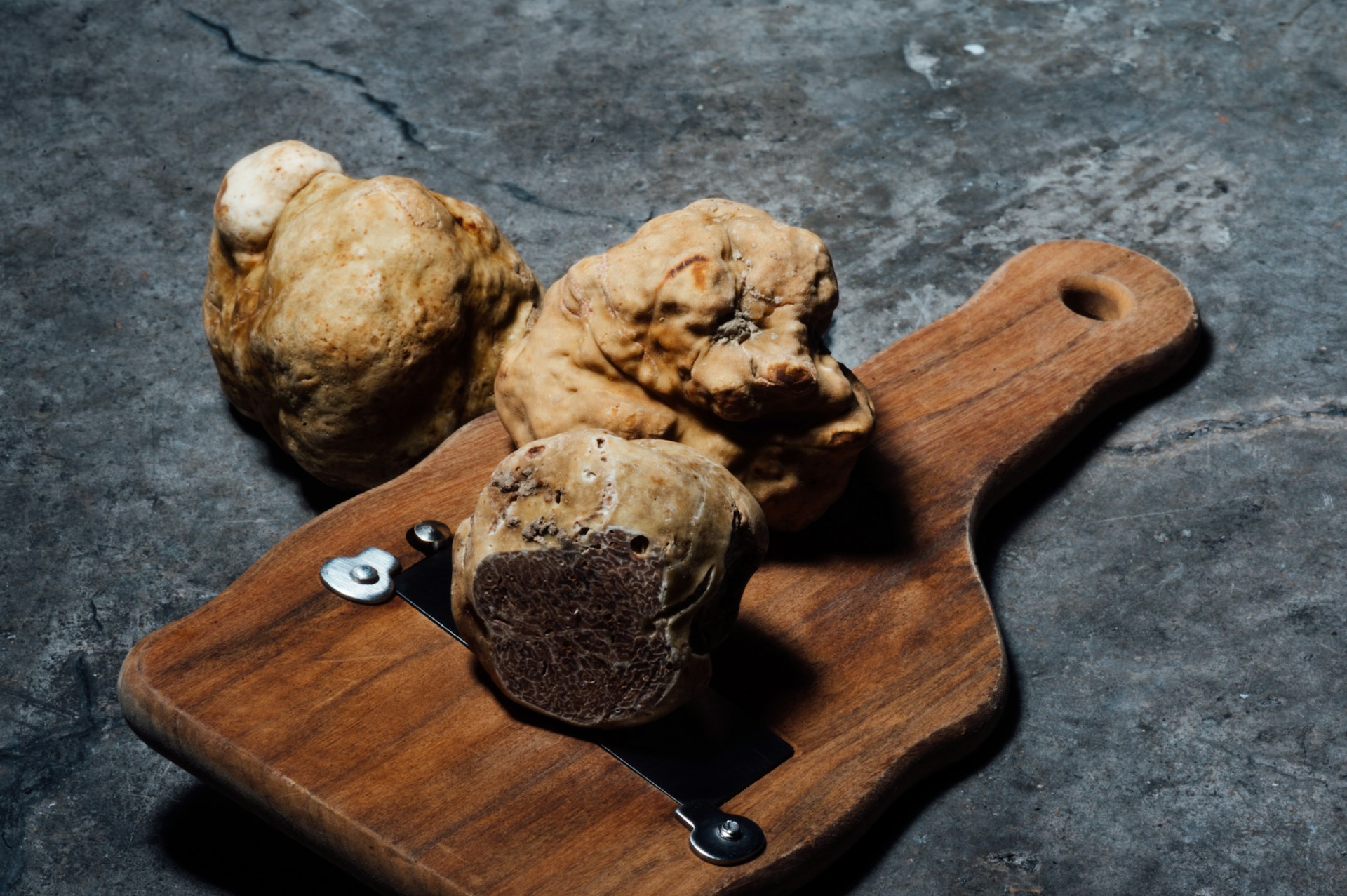
San Miniato white truffles are Tuber magnatum pico, the species that commands the highest prices of any truffle in the world. Truffles are fungi, but they are far removed from the mushrooms sold at a supermarket: they grow underground, have no cap or stem, and cannot be farmed with any reliability. White truffles grow in symbiosis with host trees such as oak, poplar, willow, and linden, trading nutrients with their underground tissue, and they fruit only where soil, moisture, and woodland line up in their favour.
The hills around San Miniato supply those conditions. Damp, loose soils, river valleys, and mixed woods of oak and chestnuts create an ecosystem that few places in Europe match, which is why the area counts among the continent’s most productive truffle grounds. The white truffle here has been known since the Middle Ages, though organized harvesting is far more recent.
The price follows the aroma. A white truffle’s value rests on its volatile aromatic compounds, sulfur-rich molecules that recall garlic, hay, and aged cheese and that fade quickly once the truffle leaves the ground. Heat drives them off even faster, which is why white truffles are never cooked.
Records draw attention, too. The largest white truffle on record, a 2.52-kilogram specimen, was found near San Miniato on October 26, 1954, by Arturo Gallerini, a hunter from Balconevisi. Exceptional specimens of any size are rare, and most finds weigh a small fraction of that.
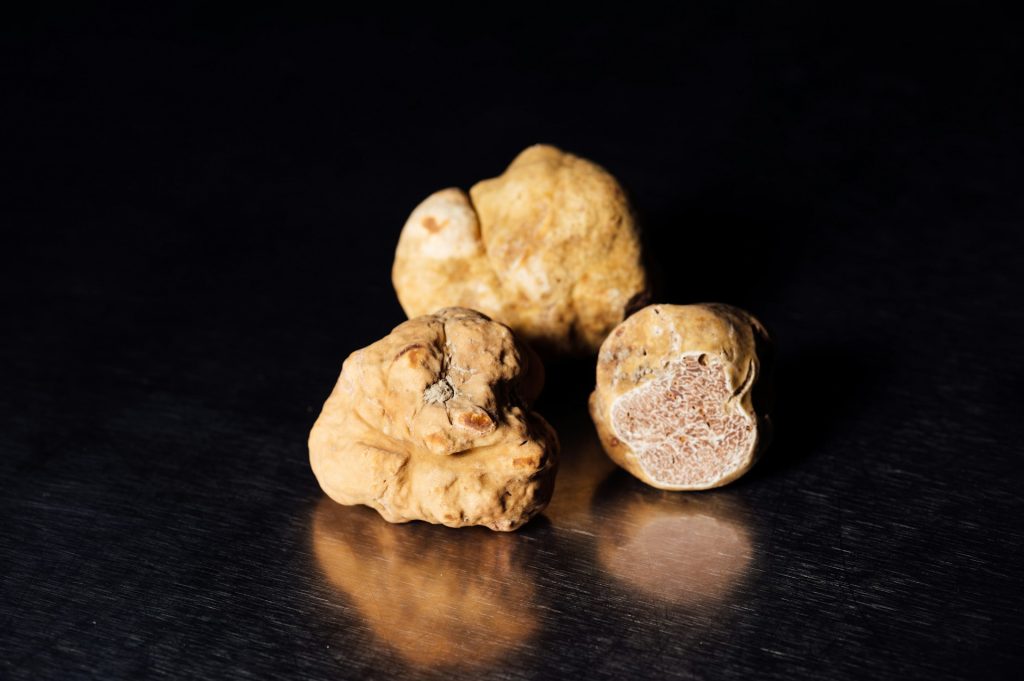
Image Source: CHUTTERSNAP | Unsplash
White truffle season and the rules of the hunt
The white truffle season runs from October to January, though the working calendar is tighter than that range suggests. Most truffles are found between September and December, and the commonly cited collection window opens on October 1 and closes in late January. Regions can adjust the dates to local conditions, so hunters follow the regional calendar.
Truffle collection is regulated by strict regional laws. Hunters need a permit called the tesserino di idoneità, issued after an examination that covers truffle species, search techniques, legislation, and environmental protection. Hunting is banned at night, defined as after sunset. Every truffle hunter must work with trained dogs, and pigs have been prohibited since 1985. Extraction tools must be small to keep soil disturbance to a minimum. Each rule follows the same idea: protecting the ground where the next harvest will form.
The dogs do the finding. Truffle dogs are trained from puppyhood to recognize one scent and ignore everything else on the forest floor, and a good dog can locate truffles found well below the surface. The skill passes to the next generation along with knowledge of which woods produce in which years. Italy’s tradition of truffle hunting was added to UNESCO’s intangible heritage list in 2021.
The harvest has become harder to predict. Truffles found in late October and early November, around the first Sunday of the month when regional fairs and markets hit peak momentum, depend on how much moisture the woods received in the preceding months, so a good week for hunters is hard to forecast. Over the past decade, hunters across Italy have reported smaller yields as heat and drought take their toll, and climate change is the explanation most often given. In November 2026, the Associated Press reported that a hot, dry summer produced smaller truffles in Piedmont and pushed prices at the Alba market up by 20 to 30 percent, a market pressure also noted by Financial Times in an research on global luxury food supply. A dry summer carries the same risk for Tuscan hunters.
Truffle festival calendar across San Miniato and beyond
The fair circuit starts in mid-October and builds toward November. Each white truffle fair has its own character, and together they let visitors follow the season over several weeks, from a village square in mid-October to a full town takeover in late November.
- Corazzano: the Corazzano truffle festival takes place in mid-October.
- Balconevisi: the truffle fair is held on the third weekend of October. The village staged its first white truffle festival in 1979.
- Acqualagna: the Fiera Internazionale del Tartufo Bianco in the Marche region runs from October 25 to mid-November.
- San Giovanni d’Asso: the truffle fair takes place on the second and third weekends of November.
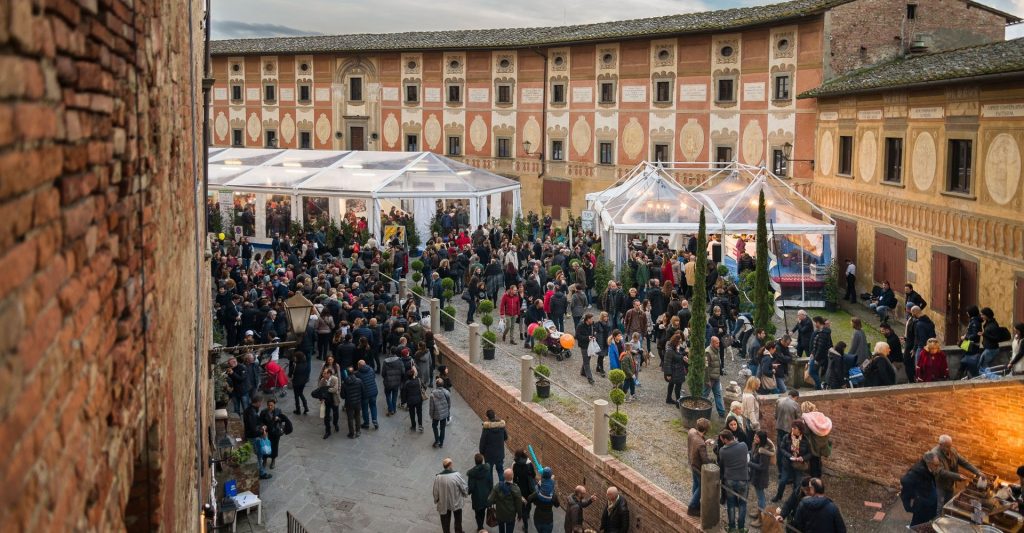
San Miniato holds the largest of the Tuscan events. The Mostra Mercato Nazionale del Tartufo Bianco, known in English as the National White Truffle Exhibition, fills the historical centre during the last three weekends of November. In 2026, those weekends fall on November 14 and 15, 21 and 22, and 28 and 29. The San Miniato truffle fair brings market stalls selling fresh truffles, truffle related products, cured meats, cheese, and local wine, and many stalls offer wine tasting alongside. A truffle association of local hunters is a sensible first stop for anyone who wants to know where a truffle was found. The town sits between Florence and Pisa, which makes it an easy day trip for travelers based in either city, though visitors who want a table at a good restaurant should plan an overnight stay. Arriving in the morning, before the market stalls fill, leaves time to taste and compare before buying.
How to buy fresh truffles
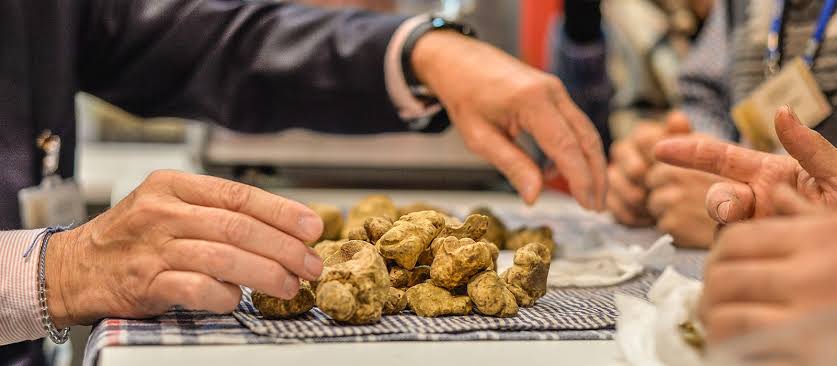
White truffles cost between €1,600 and €4,500 per kilo, depending on size, quality, and the year’s harvest. Truffles lose about 3% of their weight each day after harvest, and the aroma fades along with it, so they should be eaten within three days. Buying from local gatherers or wholesalers gives the clearest picture of origin and freshness, and a vendor who lets a buyer smell the truffle before weighing it is usually confident in the quality.
The best truffles are firm and aromatic when fresh. A good white truffle has a smooth skin in pale yellow or greenish tones, an interior that ranges from hazelnut to chestnut brown, and fine light veining. Tuscany also produces black truffles, which are less expensive and tolerate gentle cooking better, but they are a different product with a different flavour.
Truffle related products are easy to carry home, though some oils rely on synthetic flavouring. Filipino travelers used to truffle oil on pizza and pasta often find the fresh version a surprise, since its aroma is lighter, more complex, and gone within days.
How to eat white truffle
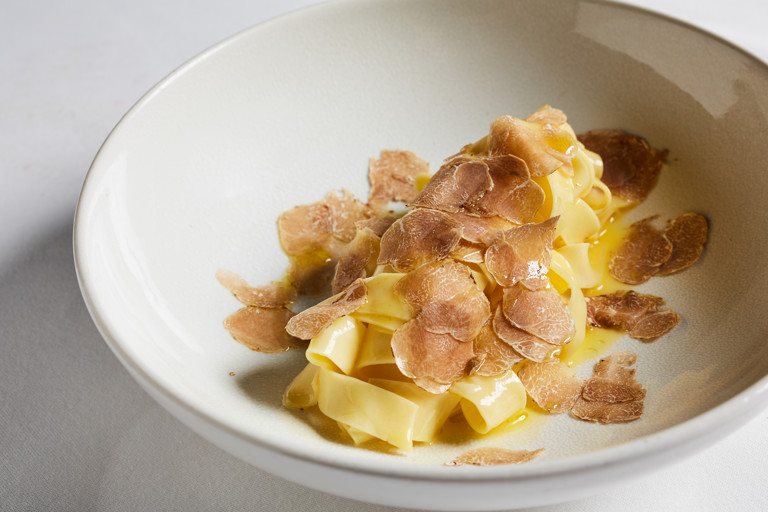
A white truffle is shaved raw, in thin slices, over food that is warm enough to release the aroma. Classic pairings include egg pastas, risottos, and fried eggs. Buttery tagliolini is the benchmark: the butter carries the aroma, and the pasta stays plain. A risotto finished with butter and Parmigiano follows the same logic, and a fried egg lets the yolk act as the sauce. A heavy sauce hides the truffle, so the best menus keep the dishes simple and give the truffle the lead.
Restaurants in and around San Miniato build seasonal menus around the harvest, with the table set for lunches that run well into the afternoon, and weekend tables fill early during the fair. Truffles are usually weighed and charged by the gram, so it helps to ask the quantity before ordering. A glass of Chianti or a white such as Vernaccia di San Gimignano suits the earthiness of the dish. Dessert tends to stay free of truffle; roasted chestnuts, a staple of the Tuscan fall, are a more usual ending.
Planning a Tuscan autumn around the truffle season
The San Miniato white truffle rewards visitors who understand what they are buying and eating. The tree and soil relationships that produce it, the regulations that govern the harvest, and the three days of peak freshness all point to the same approach: go in season, buy from the source, and eat quickly. The weekends of November give the clearest view of the town at its busiest, while mid-October offers smaller village fairs, and December brings the end of the white truffle season and a calmer pace in the woods and the old town. Winter then belongs to the black truffles, which keep Tuscan menus supplied after the white truffle has finished.
