

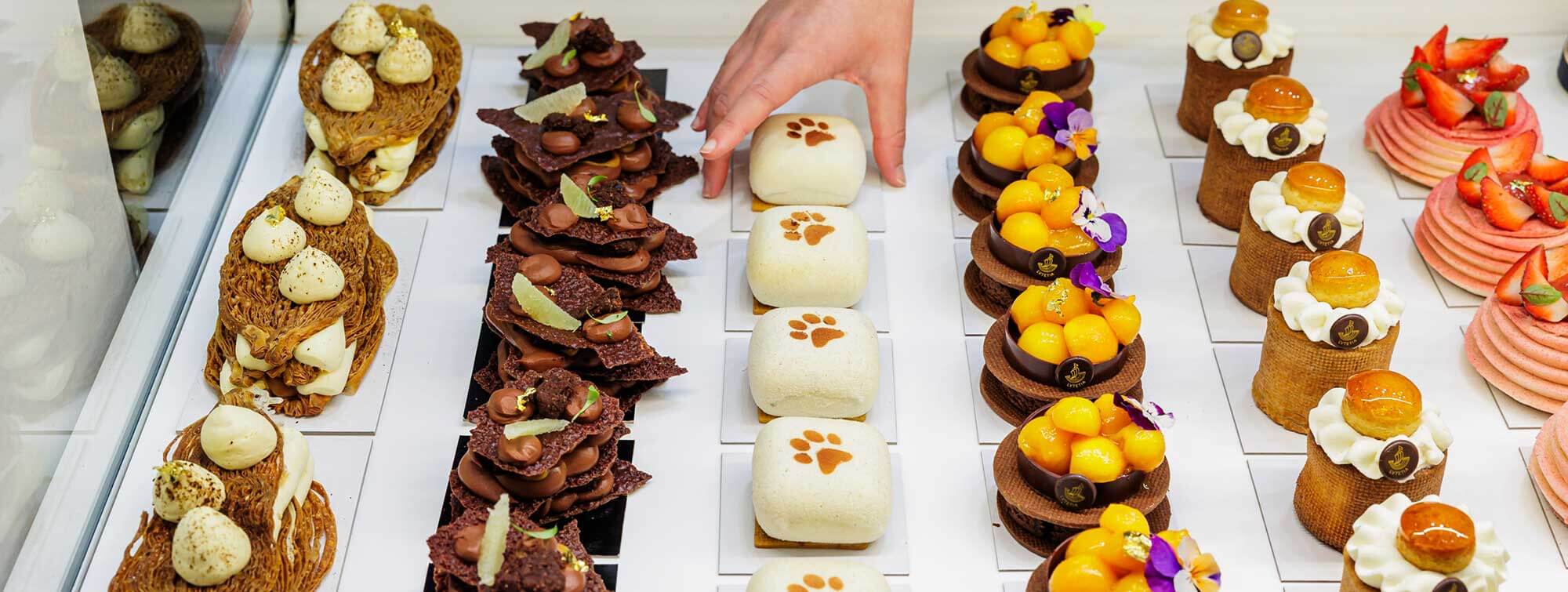
Salon du Chocolat Paris makes the strongest case that chocolate deserves the attention usually given to fine wine or haute couture, and the 2026 edition, taking place from October 28 to November 1 at Porte de Versailles, makes that case at full scale. For five days, chocolatiers, pastry chefs and cocoa producers fill Hall 5 with tastings, competitions and a runway of edible couture. For travelers who plan a year around good food, it is an event worth building a trip around, and for anyone curious about chocolate, Paris is where the trade comes to show its best work.
How the Salon du Chocolat began and what it has become
The Salon du Chocolat was founded in 1994 and has been held since the 1994–95 season. It has grown from a specialist gathering into what organizers and Paris tourism bodies call the world’s largest chocolate exhibition.
The event is typically held once a year over five days in late autumn at Paris Expo Porte de Versailles. About 250 exhibitors are expected this year, joined by roughly 500 participants once chefs, confederations and producers are counted, from close to 30 countries. The show attracts nearly 100,000 visitors, which explains why the aisles stay full from opening to closing.
The Salon has also made its way to the world. The organizer now runs around fifteen events a year on four continents, with editions in cities such as Tokyo, New York, Dubai, Shanghai and Mumbai. The Paris show remains the reference point and the place where new ranges and major events are previewed each year.
What exhibitors put on the table
Visitors notice the range first. Exhibitors showcase a full course of chocolates, pralines, truffles and pastries, alongside bars, sweets and confections from small workshops and long-established houses. The full name, Salon du Chocolat et de la Pâtisserie, signals how much of the program belongs to the pastry counter.
Tastings of single-origin chocolates sit beside artisanal confections, so comparing the fruit-forward acidity of one origin with the roasted depth of another takes only a few steps. Bread has a place too. On Thursday, October 29, tastings tied to the Master du Pain au Chocolat, organized with the national bakery confederation, bring the viennoiserie into the conversation.
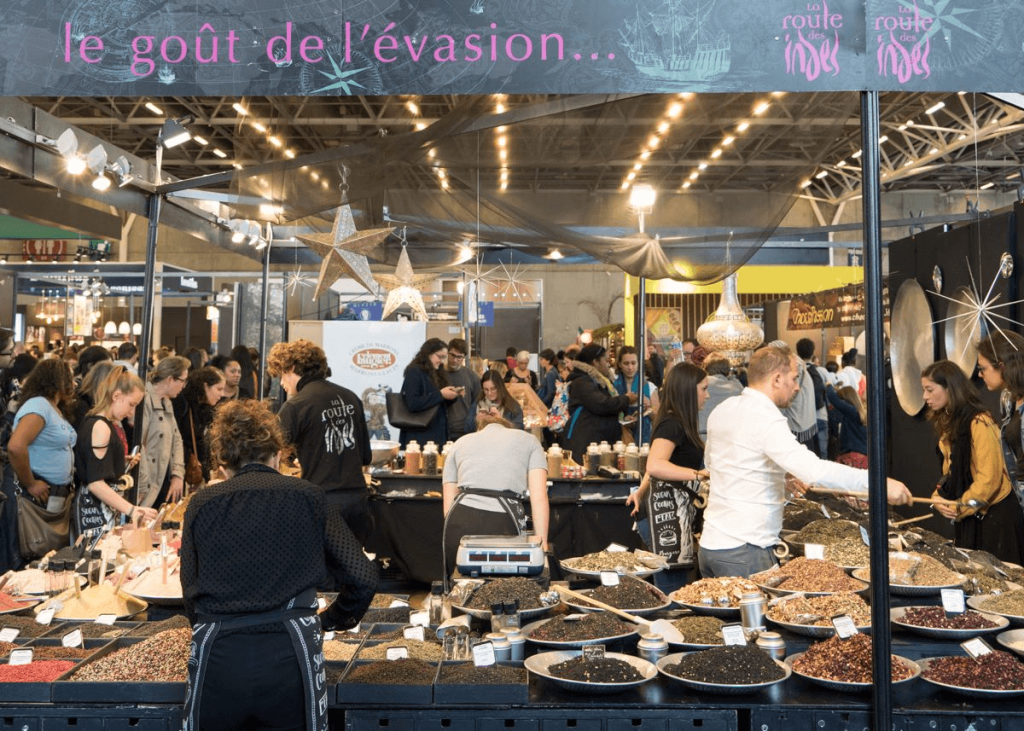
For trade professionals, the show doubles as a sourcing floor. Chocolate makers meet buyers to present their produce, the full course of new ranges are previewed ahead of the holiday season, and the lines at the busiest stands tend to form around products that have not yet reached a shop.
The 2026 program adds a few highlights of its own. The finalists for Meilleur Apprenti de France in chocolate and confectionery show their work under the theme “Depths of the Sea,” and the current French Dessert Champions, Adrien Salavert and Bastien Meulot, are among the announced participants, alongside guest chefs invited by Gault & Millau. The Salon gave a generation of French pastry chefs and chocolatiers a public stage and has become a launch pad for younger talent, and the apprentices’ pieces are a reminder of how long the training behind a single dessert can take.
Competitions and demonstrations on stage
Competition gives the Salon its edge. Le Mondial des Arts Sucrés is an annual pastry contest in which professionals and keen amateurs compete for the Trophée International de la Pâtisserie. The World Chocolate Masters, in the format its organizers describe, brings twenty chefs and chocolate makers from around the globe to compete in six categories, including chocolate sculpture and confection, before a jury of international chocolatiers and pâtissiers.
The results matter beyond the trophy. Organizers of the Masters note that creations first tested in competition are adapted for the general public in the years that follow, so what appears on the stage in October often reaches shop counters the next year.
Live demonstrations run throughout the five days. Master chocolatiers and pastry chefs, including chefs from Paris hotels such as Le Bristol and Lutetia in past editions, walk audiences through tempering, glazing and assembly, and share the secrets behind desserts that look effortless. Watching a pastry chef temper chocolate at close range teaches more than any recipe.
The chocolate fashion show
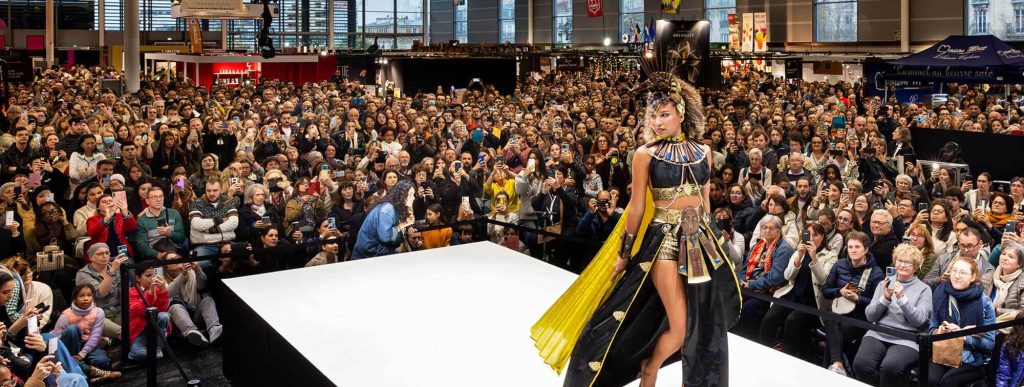
The chocolate fashion show is the Salon’s best-known spectacle and has been a signature event for three decades. Models walk the runway in couture made of chocolate, designed by pairings of chocolatiers and fashion designers. The show draws crowds at every performance, and the 2026 edition promises the return of a musical performance with chocolate costumes, staged with the Académie Internationale de Comédie Musicale (AICOM) association.
The craft is harder than it looks. An edible gown must hold its structure under stage lights, and melting is always a risk, which turns each runway appearance into a demonstration of technique as much as design.
Sculpture fills the rest of the hall. In 2022, Jean-Luc Decluzeau built a three-quarter-scale Bugatti from 400 kilos of chocolate, and large artistic creations of that kind remain a fixture of the show.
Cocoa producers, fair trade and bean-to-bar makers
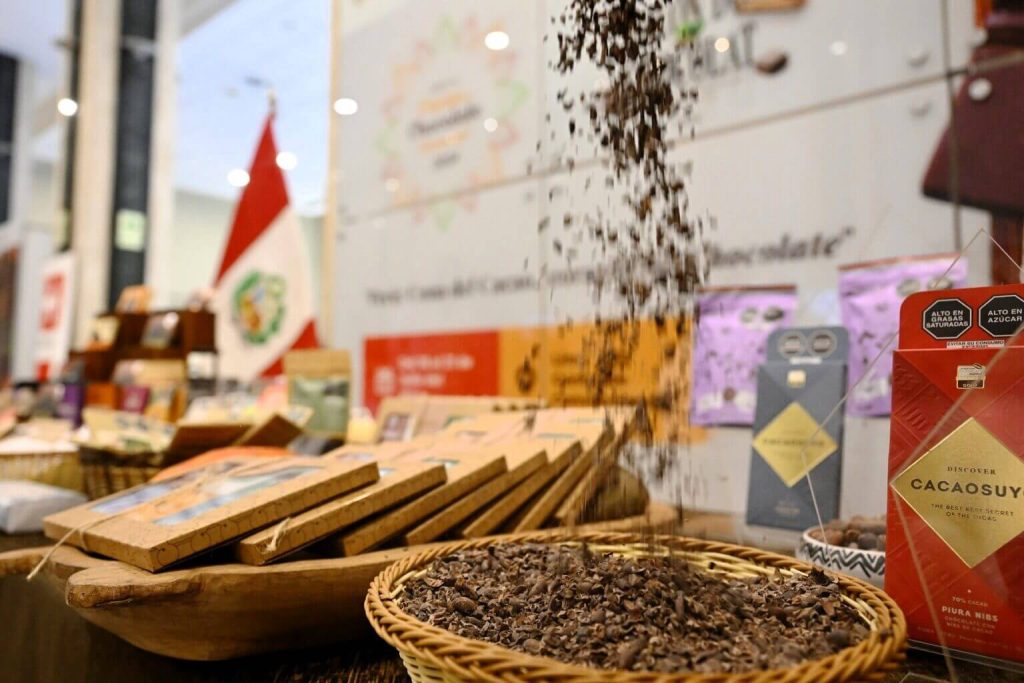
Behind every pastry sits agriculture. The Salon invites cocoa producers from growing countries to explain the origin and quality of their beans, and its organizers describe a mission to raise awareness of the sector’s economic, social and environmental challenges.
For context, Côte d’Ivoire and Ghana together grow roughly 60 percent of the world’s cocoa, and in recent years both countries have pushed for a larger share of the value that traders and manufacturers have long kept for themselves. A fair price for the farmer is now part of the conversation on the show floor.
Fairtrade/Max Havelaar France has held a stand at the show to explain how fair trade answers a market dominated by a handful of multinationals, in an industry where more than 90 percent of the world’s cocoa is grown on small farms. A dedicated bean-to-bar space and conferences on cocoa have also given small makers, who process the beans themselves, a platform beside the larger houses.
Brazil offers a useful example. Dengo, a bean-to-bar brand co-founded by Natura’s Guilherme Leal, buys cacao from farming families in Bahia and the Amazon at prices it says sit well above the commodity market. The company aims to double the income of 3,000 cocoa farmers by 2030 and has opened boutiques in Paris.
Planning a visit to Salon du Chocolat Paris
The show runs daily from 10:00 to 19:00 in Pavilion 5 at Porte de Versailles, in the 15th arrondissement. Because attendance is high, tickets are best bought in advance through the official website to avoid a long line at the entrance. Visitors who subscribe to the newsletter receive program updates in an inbox, and it is worth checking the stage schedule before arriving so that a favorite chef’s demonstration does not clash with a tasting.
Families have a place here as well. Hands-on workshops are available for adults and children, and interactive experiences and themed discovery areas keep younger visitors occupied between tastings. Head for the sculptures and the runway first, when crowds are thinner, and leave the tasting stands for the afternoon.
Getting there is straightforward. Porte de Versailles is served by Métro line 12 and by the T2 and T3a tram lines, and the exhibition park sits close enough to central Paris that a morning at the Salon can be paired with an afternoon at a museum or a walk along the Seine. A full visit takes most of a day, and professionals will want a second day for the competitions.
For travelers from the Philippines, a few things are worth settling early: hotel dates near the 15th arrondissement, and room in the bag for purchases. Chocolate travels best in a carry-on, kept away from heat.
A city built for chocolate lovers
Outside Hall 5, Paris extends the experience. Chocolate makers keep small shops on streets across the city, and a dark truffle beside a glass of champagne is a familiar pairing in the cafés and salons near the Seine. Late October gives travelers a reason to see them in a single trip, and the days around the Salon are a good time to compare a chocolatier’s own shop with the stand it keeps at the show.
Craft runs through all of it. Every exhibitor, from the apprentice to the palace pastry chef, arrives with the same passion for a material that demands patience, temperature control and a good deal of repetition. Visitors who spend a few hours watching that work tend to look at the sweets of everyday life differently, and to ask better questions about where the cocoa came from and who was paid for it.
Taken together, the exhibitions, competitions, tastings and entertainment make the Salon du Chocolat Paris a lesson in how much thought goes into a single square of chocolate. Visitors usually bring a box of pralines home, though the lasting souvenir is a sharper palate.
