

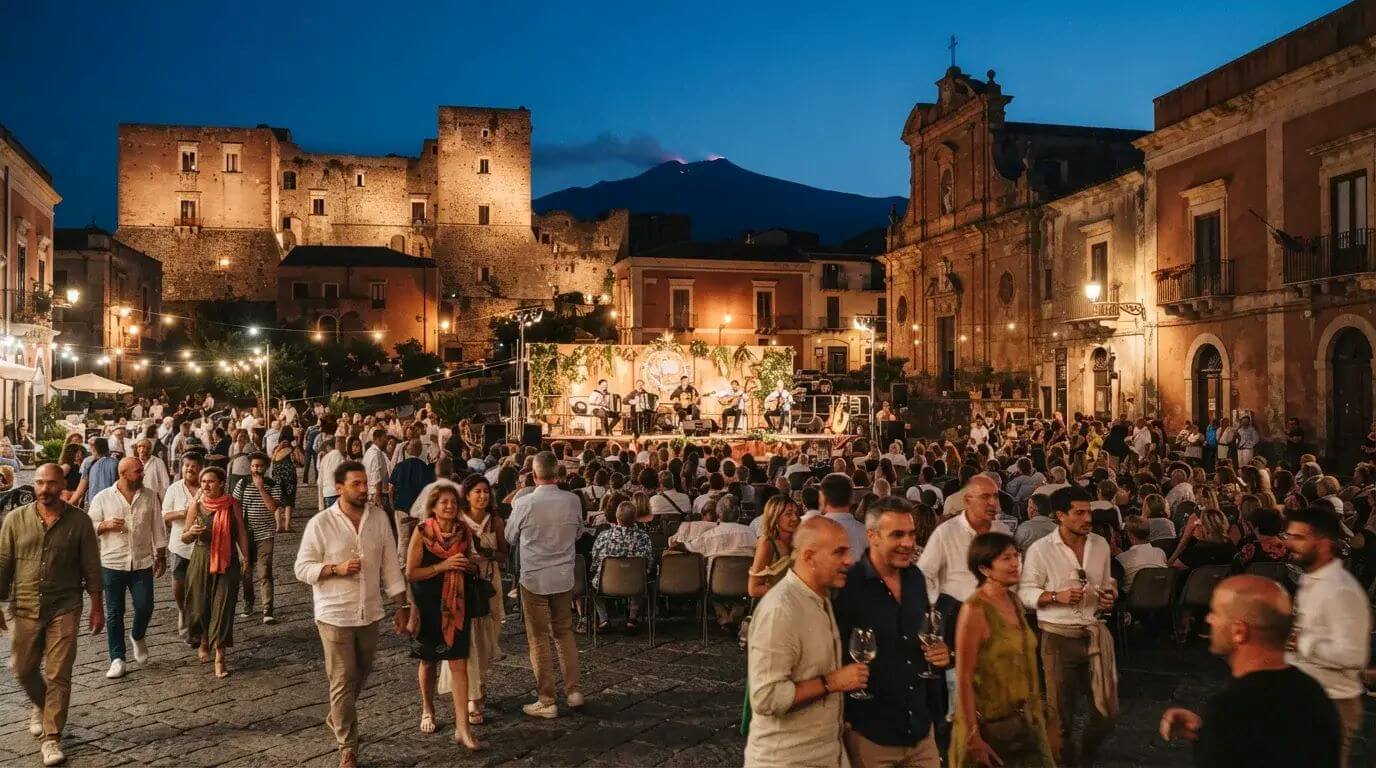
The Ottobrata Zafferanese is a month-long harvest festival in Zafferana Etnea, a hill town on the eastern slope of Mount Etna in Sicily. Held every Sunday in October, it brings growers, bakers, beekeepers, and winemakers into the historic center, with each Sunday dedicated to a different product of the volcano’s earth. The 46th edition is running now, folded into the town’s bicentennial celebrations. For visitors planning a trip, and for those who follow how food traditions are kept alive, the festival shows how a small Sicilian community turned its autumn harvest into one of the region’s most anticipated events.
The history behind the Ottobrata Zafferanese
The festival began modestly. By most accounts, the Ottobrata Zafferanese originated in 1978 as a local market built to promote agricultural products. Farmers set out what the slopes of Etna produced, and the town came to buy. Over the following decades that market evolved into a full cultural event, now formally recognized by the municipality as a celebration of public interest and run with a volunteer organizing committee.
Today it is counted among southern Italy’s most celebrated autumn festivals. Its scale is part of the draw: the market exhibition of typical products spreads through the historic center, and the visitor attracted by the food tends to stay for the crafts, the music, and the view of the volcano. Zafferana Etnea, in the province of Catania (CT), sits between the mountain and the sea, and the beauty of that position is hard to separate from the produce grown here.
How the Ottobrata Zafferanese festival unfolds every Sunday in October
Each Sunday of the festival highlights a specific regional product of the Etna area, so the event changes character from one week to the next.
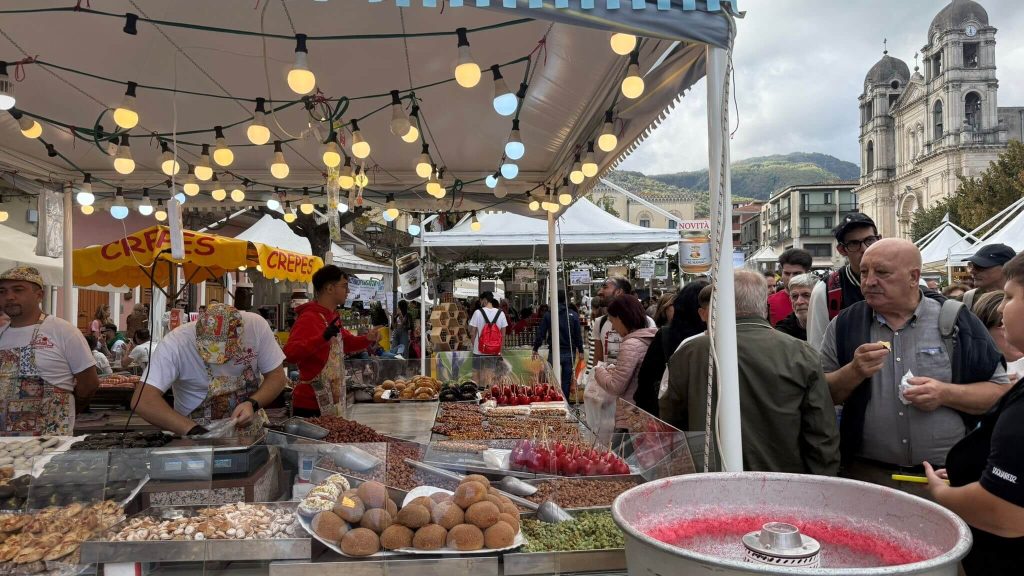
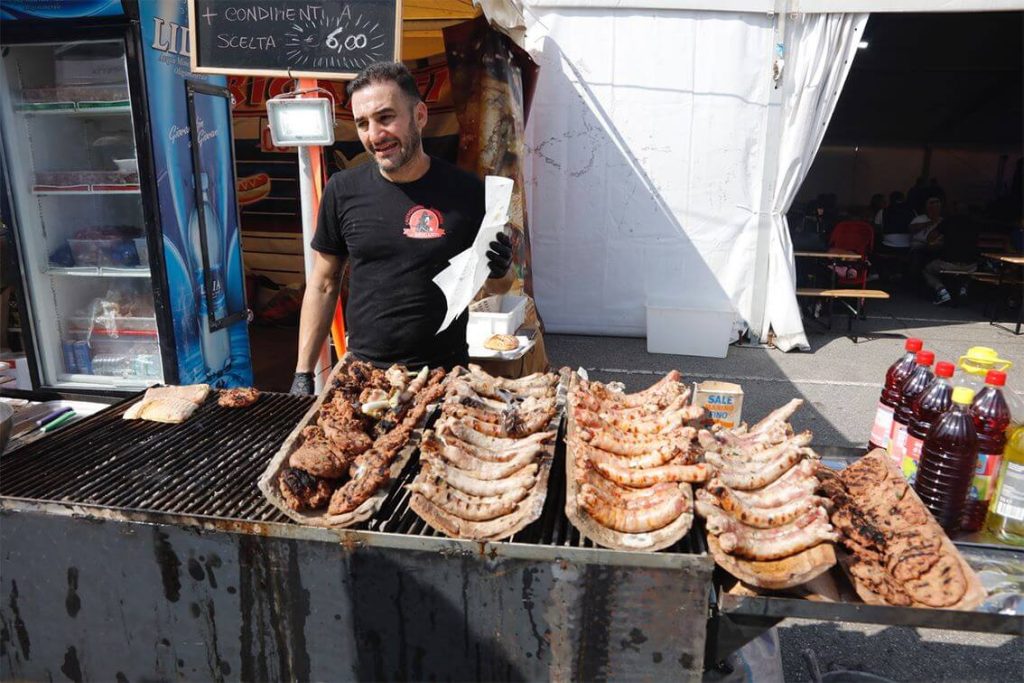
In recent editions the sequence has opened with the grape festival, followed by the honey festival, the Etna apple festival, and a final Sunday for mushrooms and chestnuts. Entry is free, and the stands stay open from morning until late evening. Along the route, gastronomic tastings include local wines, cheeses, and sweets, alongside cured meats, preserves, and pastries sold from stands on the main streets. Many of the local products on offer come straight from Etna’s farms and workshops, which keeps the selection tied to the season.
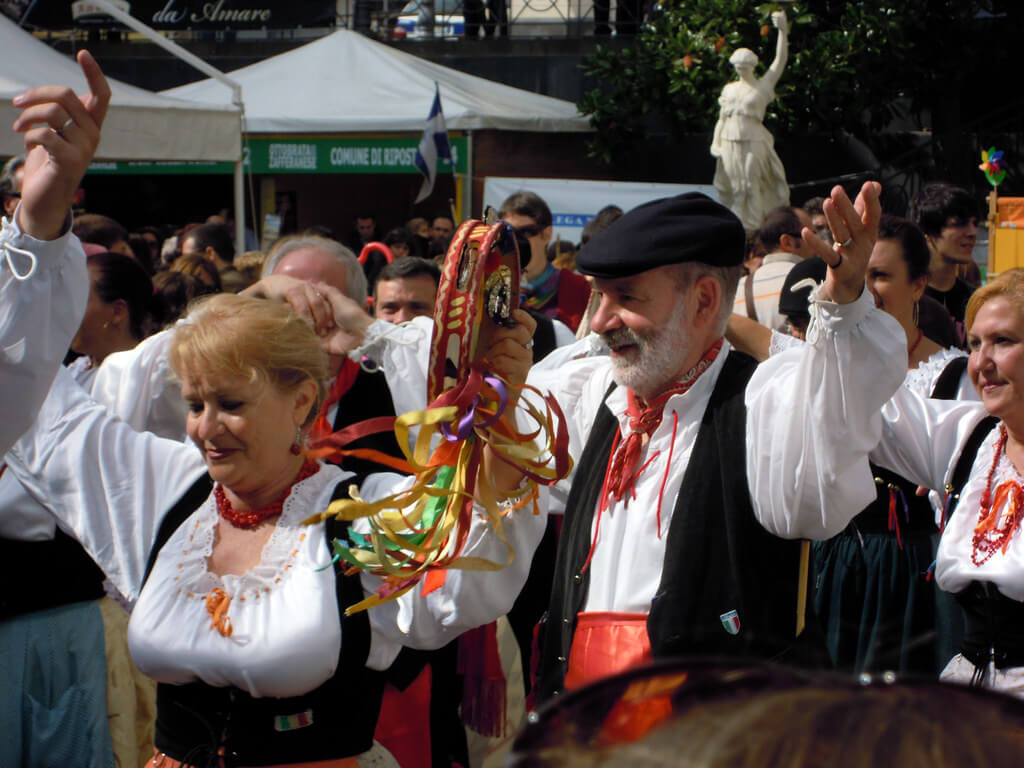
Entertainment fills the hours between meals. Live music, including folk performances, shares the program with cooking demonstrations in which cooks prepare typical dishes around that Sunday’s protagonists. Other activities include guided visits to the town hall’s art exhibitions and quad tours across the 1992 lava flow.
The organizers also accept a practical responsibility. The Ottobrata Zafferanese emphasizes sustainability, and food service relies on biodegradable materials. For a festival that fills the town’s streets every Sunday, the policy keeps disposable waste manageable.
The Etna apple festival and the Cola varieties
The apple Sunday tends to draw the most curiosity from first-time visitors, because the Etna apple looks nothing like the fruit sold in most supermarkets. It is small, pale, and very sweet, grown on terraces of volcanic earth where cold nights concentrate the sugars. Cola and Gelato Cola are the best-known varieties, and both have an intense aroma. The taste is sweet with a slight tartness, a balance that suits eating the fruit fresh. The name Cola is a Sicilian diminutive of Nicola, tied to a monastery near Nicolosi where the variety is believed to have originated.
Ripeness is visible on the skin. The apples wrinkle as they ripen, and the wrinkling increases their sweetness, so a creased apple is usually a good one. Etna once grew around nineteen native apple varieties, and only a handful remain in regular cultivation, which explains the care local growers take with the ones that survive.
Visitors who miss the festival day can still buy them. Zafferana apples are available in autumn at local shops, and growers also sell preserves, liqueurs, and dried fruit made from the harvest, all of which travel better than fresh fruit.
Honey, biscuits, and the sweets of Zafferana
Zafferana produces a wide range of honey varieties, and the honey festival is the easiest day to compare them. The famous types are orange blossom and eucalyptus. Honey processing can be observed from May to September, so a summer visit suits anyone curious about the work behind the jars. Outside festival dates, top quality honey is available near the restaurant on the road to Milo.
The town is equally famous for its chocolate-covered skier biscuits, which have been popular since the 1950s, and the skiers coated in chocolate remain a standard souvenir. Tea leaves, its other signature biscuit, are crunchy wafers covered with almonds and pistachios. The Salemi confectionery shop offers original Zafferana sweets, and it is a sensible stop for anyone assembling gifts. At the festival, stands also sell almond paste, nougat, and caramelized dried fruit, the last of which works as a snack while walking the stalls.
The savory side of the market is just as broad. Olives and olive oil, mushrooms, chestnuts, and mustard sit beside bags of walnuts, hazelnuts, and pistachios, while pomegranates and prickly pears arrive with the season. Many other delicacies fill the stands, so a first visit rarely covers everything.
Etna wines and the grape festival
Etna wines are known for excellent quality, and the first Sunday of the festival is where that reputation meets the public. Nerello Mascalese is the native grape variety most associated with Etna reds, and Nerello Cappuccio enhances the bouquet of the blend. Grapes from the volcano’s terraces are harvested late, and the cool altitude is a large part of the style.
Wineries in Etna produce both bottled and bulk wines, which accounts for a wide range of prices. A bottle from a well-known estate sits at one end of that range and a local carafe of bulk wine at the other. A buyer can choose by budget and still take home something specific to the place.
Artisan markets and Sicilian crafts
The artisan markets give the festival a second layer. Stands display traditional Sicilian crafts, including textiles and lava stone works, and the historic center hosts exhibitions of older trades such as ironwork, ceramics, and painted carts. Many of these makers work by hand in front of visitors, so the exhibition doubles as a lesson in how local materials are used.
Lava stone is the clearest example. The same volcano that feeds the orchards and vineyards also supplies the carving material, which ties the crafts to the food in a way a visitor notices after an afternoon of walking between the two.
Why the festival matters to Zafferana
The Ottobrata Zafferanese fosters community pride and participation among local residents and volunteers. Committees organize the program, families run stands, and the town’s associations stage the exhibitions. The festival also plays a vital role in the local economy, supporting farmers and artisans who sell directly to visitors and extending the tourist season into autumn.
Planning a visit to the Ottobrata Zafferanese
Zafferana Etnea is within an hour’s drive of Catania, and the festival is held in the historic center, where navigation is easiest on foot. In past editions, stands have lined the stretch between Piazza della Regione Siciliana and Via Roma, with food areas and stages set up around the main squares.
Arriving in the morning leaves time for the exhibitions before crowds build. Choosing a Sunday that matches your interest, whether grapes, honey, apples, or mushrooms and chestnuts, shapes the whole experience and gives the day a focus. Families with children will find it easy to pace, since play areas and activities for younger visitors run alongside the tastings. Because the program can continue to change from year to year, the organizers’ official page is the best place to find current dates and schedules before booking travel.
A harvest calendar worth keeping
The Ottobrata Zafferanese works because it stays specific. Each Sunday names one product, the stands sell what grows within sight of the town, and the entertainment, crafts, and tastings share a single street. Among Sicily’s many food festivals, it holds its place through the excellence of what is sold and the community behind it. For anyone who values food from a particular place, it is worth planning a trip around.
