

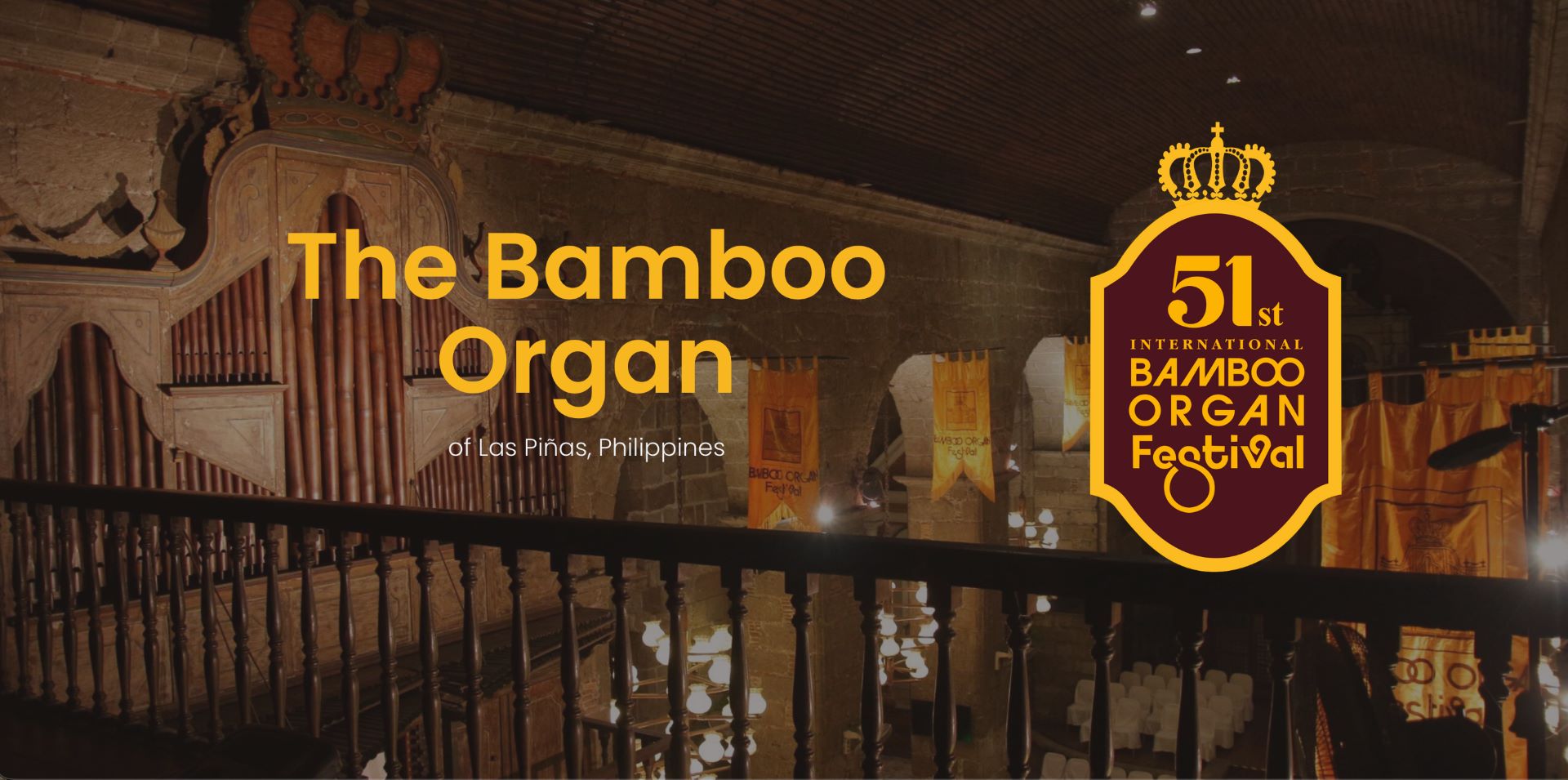
Image from The Bamboo Organ
Every February, Las Piñas slows down just enough for people to listen to the sound emerging from somewhere in the city. It is once again the season for the International Bamboo Organ Festival, and what once was a memory becomes the music of the people again in this living tradition.
As the city gears up for the 51st International Bamboo Organ Festival 2026, the event serves as both a celebration and a reminder that culture endures when it is revitalized and shared with the public to bridge generations and reach beyond borders.
A February tradition
In Las Piñas, February is when the Bamboo Organ Festival enlivens the city. For residents and visitors who return each year, it has become a familiar part of the city’s calendar that brings together musical masterpiece, history, and the local community.
The festival does not rely on spectacle. Its concerts are unhurried and focused, giving audiences time to listen and reflect on the sound of the historic bamboo organ. Over time, this yearly cultural event has made February a month when Las Piñas City heritage is experienced by all.
The story behind the International Bamboo Organ Festival
Long before the festival became the center of an international celebration of music, the bamboo organ shaped life in Las Piñas. When it was first built, it was a symbol of faith, creativity, and local ingenuity that carried the city’s history as much as its devotion.
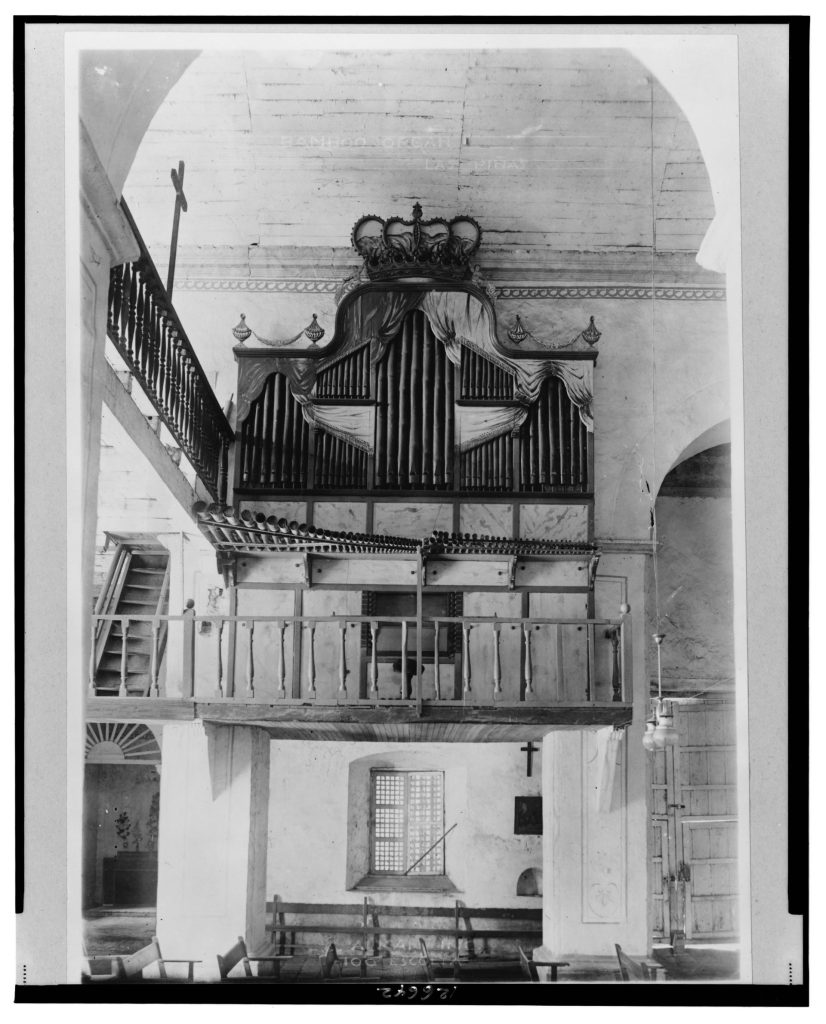
Image from Frank and Frances Carpenter Collection – Library of Congress, Public Domain
The bamboo organ and its place in Philippine history
What makes the Bamboo Organ of Las Piñas truly unique is its construction. Unlike typical pipe organs made of metal, this one has 1,031 pipes, most carved from bamboo. A missionary from Spain, Fr. Diego Cera built it in the early 1800s, carefully adapting European organ design to suit the tropical Philippine climate.
Finished in 1821, the organ has withstood natural disasters, years of wear, and the test of time. It underwent restorations both locally and in Germany before returning to the Philippines in 1975, sparking renewed interest in the instrument and inspiring the creation of the International Bamboo Organ Festival. Each year, musicians and audiences from around the world gather to experience its distinctive sound.
The Bonn legacy
Many consider Bonn, Germany, as the birthplace of the International Bamboo Organ Festival. Established in 1975 to celebrate the successful return of the bamboo organ to the Philippines after the government embarked on a two-year restoration project with world-renowned firm Johannes Klais Orgelbau in Bonn. Before its return to Las Piñas City, the newly restored bamboo organ was highlighted in an international concert featuring German organist Wolfgang Oehms. Inspired by this event, the city launched the annual International Bamboo Organ Festival.
In 2003, the Bamboo Organ was officially recognized as a National Cultural Treasure as an acknowledgment of its craftsmanship, resilience, and cultural importance. Today, it continues to play as both a historical artifact and a living instrument at the heart of a festival that bridges tradition and contemporary music.
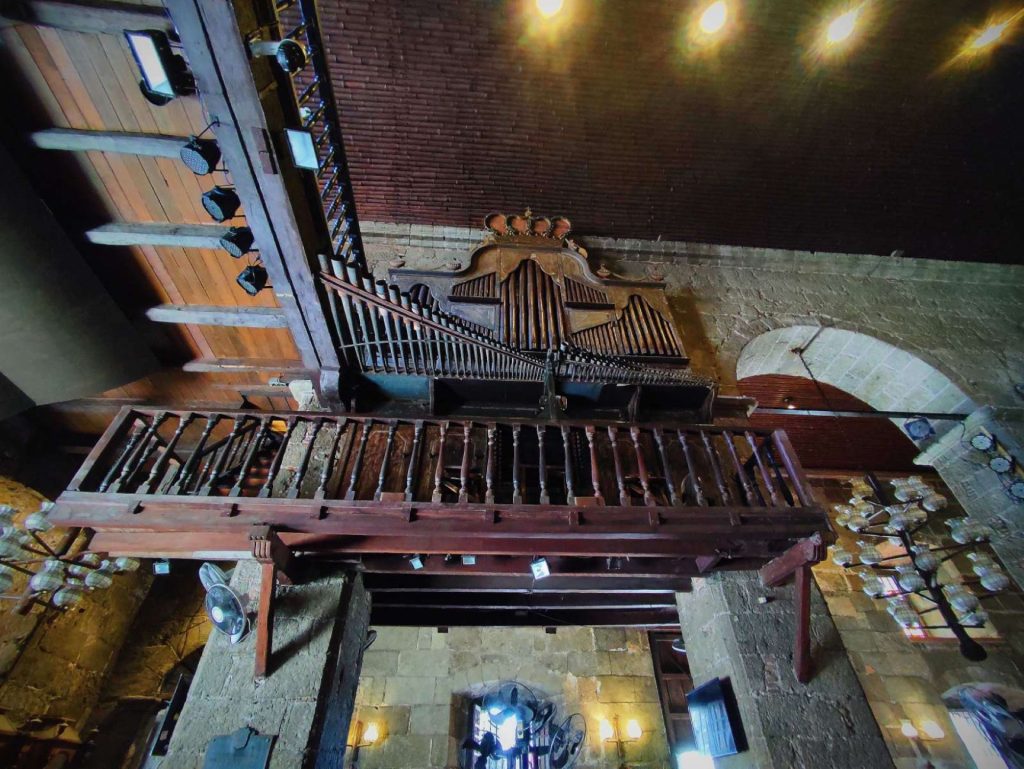
Image from the Philippine Information Agency
The international rise of the Bamboo Organ Festival
The bamboo organ festival did not emerge overnight. Its evolution came from years of careful curation, growing interest, and a desire to make culture accessible.
From church concerts to a global organ festival
What began as a series of intimate performances gradually expanded into a full-fledged organ festival. Local musicians were soon joined by international artists, each bringing their own interpretation while honoring the instrument’s unique character.
This exchange transformed the bamboo organ festival into a platform for dialogue between cultures, musical traditions, and audiences. The presence of international bamboo performers added new dimensions to the event without diminishing its local roots.
When the festival was shared with public audiences
A defining moment in the festival’s growth came when performances were increasingly shared with public audiences. By opening doors to wider participation, the event shifted from a niche gathering into a communal experience.
This accessibility reinforced the festival’s purpose: to ensure that the bamboo organ remains part of everyday cultural life, rather than a relic admired from afar.
What to expect at the 51st International Bamboo Organ Festival 2026
Now in its 51st year, the International Bamboo Organ Festival builds upon the last festival by honoring a legacy that has endured for more than five decades while remaining open to renewal and reinterpretation. This year, the festival once again invites audiences to gather around a tradition that has long celebrated the richness of Filipino culture alongside outstanding musical traditions from around the world.
Image from The Bamboo Organ
Highlights of the festival
Running from February 15 to March 1, the 51st International Bamboo Organ Festival continues its tradition of carefully curated performances that reveal the bamboo organ’s remarkable range and expressive depth. From grand gala concerts to intimate recitals and masterclasses, the program offers varied listening experiences for both devoted followers and first-time audiences.
Classical works remain central, complemented by contemporary interpretations that place the bamboo organ in fresh musical contexts. As in previous years, the festival prioritizes thoughtful programming over spectacle, ensuring that each performance feels intentional, resonant, and rooted in musical integrity.
The host at the heart of the festival
Las Piñas is part of why the festival feels the way it does. The city’s history, its people, and its long relationship with the bamboo organ shape the atmosphere of every edition.
Behind the scenes, local institutions, cultural groups, and volunteers work closely with the organizers to bring the festival to life. Their involvement keeps the event grounded, personal, and deeply connected to the community it grew from.
At the helm of the festivities is longtime artistic director and resident titular organist Armando Salarza, who curates the festival’s annual program. A true-blooded Las Piñero, Salarza first learned to play the bamboo organ at the early age of 11. He was the Bamboo Organ Foundation, Inc. (BOFI) first ever scholar, funding his musical studies in Graz and Vienna, Austria.
Why the festival continues to matter today
In an era marked by constant movement and change, the International Bamboo Organ Festival offers moments of stillness and reflection.
A celebration of music, memory, and community
At its heart, the festival remains a celebration. Families attend together, long-time supporters sit alongside new listeners, and music becomes a bridge across generations. The presence of international bamboo organ musicians further affirms the festival’s role as a meeting point between local heritage and global appreciation.
A tradition that endures through the years
Each year, news of the International Bamboo Organ Festival is shared much the same way it always has been: dates are announced, programs are introduced, and people begin to plan their visits. For many, this is a sign that the festival they’ve come to expect is returning once again.
Rather than relying on grand gestures, the festival renews itself through consistency. Audiences come back, new listeners attend out of curiosity, and the bamboo organ is heard again in the space it has long belonged to.
A prized legacy
The International Bamboo Organ Festival remains part of Las Piñas because it continues to be celebrated, shared, and attended year after year. Its history matters, but so does the simple act of gathering to listen. From the story of the bamboo organ to the steady growth of the festival itself, what keeps it relevant is consistency and care.
As February approaches and the 51st International Bamboo Organ Festival 2026 draws near, Las Piñas once again becomes a place where music and community meet with less fanfare and more purpose. For those wanting to see the bamboo organ up close, an on-site museum situated at the old Spanish convent serves as entrance for visitors.
